Why Am I so Hungry? The Story of Leptin

Honestly, of all the things that go wrong in the human body, the hardest one for me has been the irrational hunger that resistance to Leptin brings. It usually goes hand in hand with insulin resistance and PCOS, and I have had to explain for years that I cannot shut off this awful gurgling in my stomach, no matter how much fiber I fill my belly with. I felt so ashamed and guilty. I felt like I had no control whatsoever, and my food addiction would always be with me, riding along like some parasite on my back, just instead of trying to eat and drain my resources for its own uses, it was making me into the leech.
Just recently in my certification courses I was validated. Apparently, there is a wonderful hormone called Leptin that regulates our hunger receptors, and mine are apparently wonky. All the pent-up shame I have held onto for years let go in that one moment, and I cried for hours for the child I was, scared and broken and desperate to find any means to turn off the vicious monster inside me that craved all kinds of unhealthy things.
We automatically crave fats and salts because we are geared to. Evolution has taken all of us and turned us into fat-seeking piggies, searching for the truffles. The problem with today’s society is that food is at hand. If you want bacon, just run to the store and grab a pound or five. Or, if you prefer more instant gratification, just go to a local fast-food restaurant and order up some salt, carbs, and fat in one giant portion within five minutes of arriving. Things are so stacked against us.
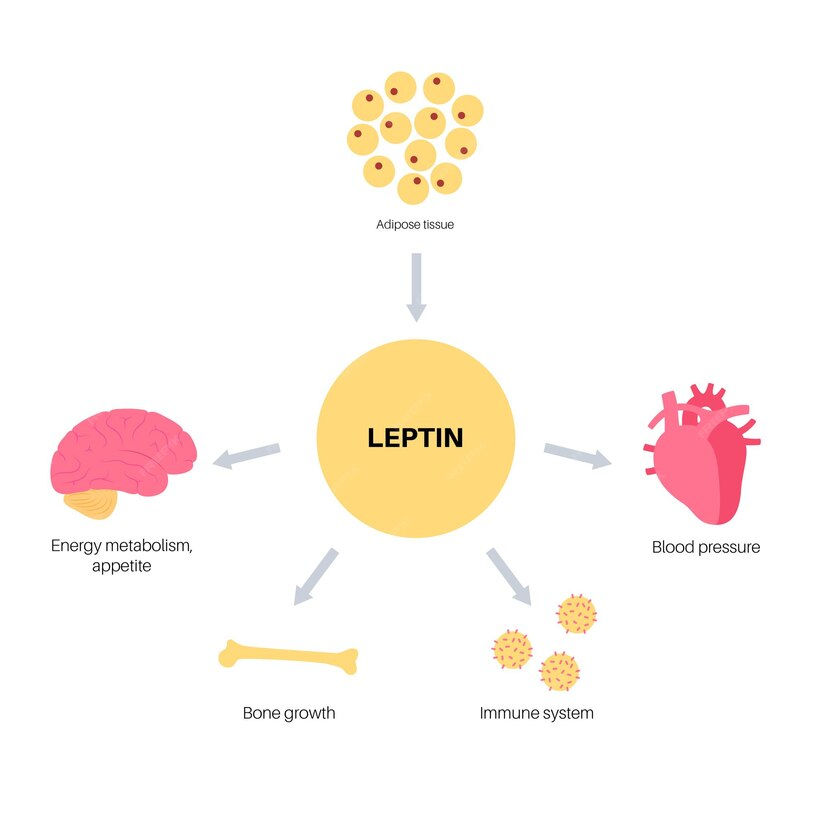
Researchers found Leptin in 1994, mapped by researchers at Rockefeller University, specifically a molecular geneticist named Jeffery M. Friedman. They discovered that the body’s fat, or adipocyte, cells create the hormone, so the greater the fat cells and larger fat cells that you have, the more hunger you will experience. That creates the terrible food drive that most obese people talk about, or food noise.

Jefferey M. Friedman
Leptin then travels to the brain’s hypothalamus, binding to the receptors there. After that, the high levels signal satiety. Lower levels signal hunger and an energy deficit, so the cravings begin.
Leptin resistance often goes hand in hand with insulin resistance, and there are several symptoms that you can look out for, including constant hunger, intense cravings, difficulty losing weight despite dieting, fatigue, inflammation, brain fog, depression, high blood pressure and lipids, and mood swings. It can also mark fatty liver disease, so if you’re experiencing these symptoms, you might want to see a doctor, if you haven’t already. I know that I had no idea until a beautiful Nurse named Connie actually took me seriously and made it her goal to get me to a healthy weight. IF you read this, thanks sister. No one had taken me seriously until then.
She helped me to lower my leptin resistance by implementing several dietary strategies and put me on a few appetite suppressing drugs, like Topamax, which she used to combat my soda addiction. I followed a no CRAP diet: No Carbonated Beverages, Refined sugars, Added fats, Processed foods.
I also increased my protein intake and my fiber by switching to a plant-based diet. At that time, I strictly followed a vegan diet for about two years and lost 150 pounds. I focused on cycling. I lifted three days a week or more based on earning my shower since the gym sat right across the road from my workplace. I lived off of legumes and plant-based smoothies. I paid attention to my sodium intake. I wouldn’t put anything in my mouth that didn’t help me achieve my goals. I became the GOAT of fitness, but I was still fat. I got down to 264 pounds, the lowest I have ever been since I was a kid. I used intermittent fasting and kept a chart of my blood pressure and my glucose levels. I ate mindfully.
Things changed though. As my life became more hectic and stressful, I stopped prioritizing sleep. I got off my routine of exercising regularly, and I became frustrated at the plateau I reached. It became a chore. I became obsessed with intake. Logging everything I ate, I became a machine, a very unhappy one. Once I started overdoing it, it was only a matter of time before I sacrificed sustainability for fast results, and I crashed hard once I got off my routine. My dad came back from California, and I started eating like he did. I gained half of the weight I lost back. I started eating meat again and quit going to the gym. Other things interfered, too, so I had a hard time emotionally keeping up the pace. Basically, shit got real, I lost Gerald, I wanted to eat what I wanted and have social time with my dad. Covid hit. And here we are again, at the beginning.
It's been about four years since Dad had his heart attack, and I am just astonished about how I let things go while I started taking care of him and prioritizing his and Gerald’s needs over my own, so if you take away anything from this article, know that you have to put on your mask before you put on your family’s masks. In other words, don’t lose yourself trying to fight a battle you cannot win. My father is in heart failure, and I don’t want to make the same nutritional choices he makes, to end up in ICU for weeks after having eight stents put in. I want to be healthy though things are stacked against us, and I know that together, with my knowledge, and the support of you guys, that beating this plateau is possible.
Rebecca
Comments